Innovation - 2026 TOP 10 SHORTLIST
Army Goodwill School, Wuzur
Anantnag, Jammu and Kashmir, India
The rural Kashmiri school where student-led innovations tackle local challenges through innovation, collaboration, and project-based learning
Army Goodwill School Wuzur, a public kindergarten, primary and secondary school in Anantnag, Jammu and Kashmir, India, is proving that low-funding and an isolated, rural location are not barriers to innovation, with student-led ideas tackling local challenges through its Innovation Club. Supported by teachers and built on the idea of Smart Resourcefulness, the Innovation Club is a space where students can identify challenges in the area, and then collectively explore ideas and work together in teams to build prototypes and test them in real-world applications. Here, learners have designed and built innovations like a foot-operated water tap that saves up to 40 litres of water, an app that helps users assess the freshness of packaged food, and an invoicing app that is used by local shopkeepers.
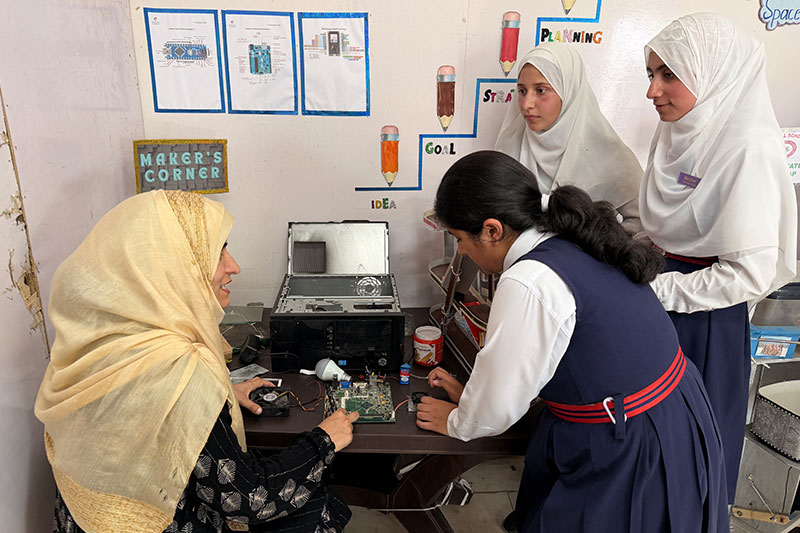
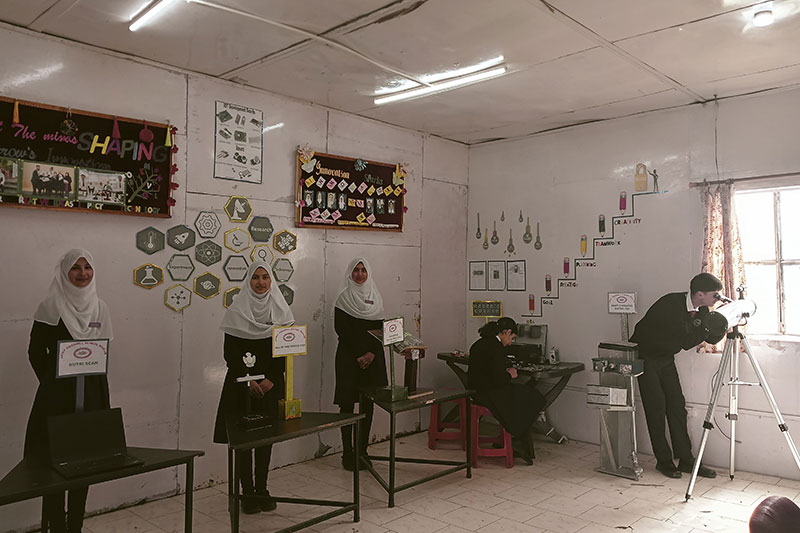
At the centre of the club is a project-based learning model that puts students in control of the innovation process. The pedagogical approach emphasises developing a scientific mindset through observation, inquiry, and experimentation, guided by a Feel, Imagine, Do, and Share framework. Rather than focusing on large-scale global challenges, students are encouraged to identify and address local issues within their villages and the surrounding community. Teachers act as facilitators, encouraging creativity, supporting collaboration, and ensuring that all ideas are valued. Despite limited resources, the school has adapted part of a classroom into a maker space, allowing students to design, develop and test their projects using available materials, helping them develop a strong scientific mindset while grounding learning in local relevance.
Through the Innovation Club, students are developing practical engineering and digital skills by creating applications that respond directly to community needs. These include a budget-friendly water purifier, validated by the Public Health Engineering Department, that has improved access to clean water for low-income families. Other innovations, such as diabetes-sensing socks using thermochromic threads, an IoT-based home automation system designed to reduce domestic fire risks, and solar-powered tools that support productivity in off-grid areas, have also been developed by student-led teams.
Building an innovation-first learning environment where students are encouraged to explore their ideas as part of its education model has resulted in a 100% pass rate in Class 10 board examinations, which is significantly above the state benchmark of 84%. Students who were once shy and hesitant are now actively participating in national-level platforms, with projects like the diabetes-sensing socks selected for showcase at Q2L Bangalore, highlighting a shift in confidence and ownership of learning.
Projects have been recognised at national and system levels, and the school has won numerous awards, including the YCL recognition and attracting visits from other schools looking to learn from its Innovation Club model. Its approach is influencing how education in similar low-resource contexts can shift from theory to practical, student-led innovation.
With exploration of ideas, teamwork, and practical problem-solving at the core of its learning model, Army Goodwill School Wuzur is giving its students the applied technical skills they need to become competent leaders, fully equipped to tackle the complex social issues they face.



Check out our social media!