COMMUNITY COLLABORATION - 2026 TOP 10 SHORTLIST
Colegio Montserrat
Barcelona, Spain
The Spanish school that has become an incubator for social entrepreneurship by integrating parents' lived experiences into its learning model
Colegio Montserrat, an independent, partly funded kindergarten, primary and secondary school in Barcelona, Spain, is actively involving parents as co-creators of their children’s academic success through its Tripod Learning model that has empowered students to launch more than 300 student-led ‘social minicompanies’ tackling real social and community challenges through projects operating with real budgets, investors, clients, and measurable impact.
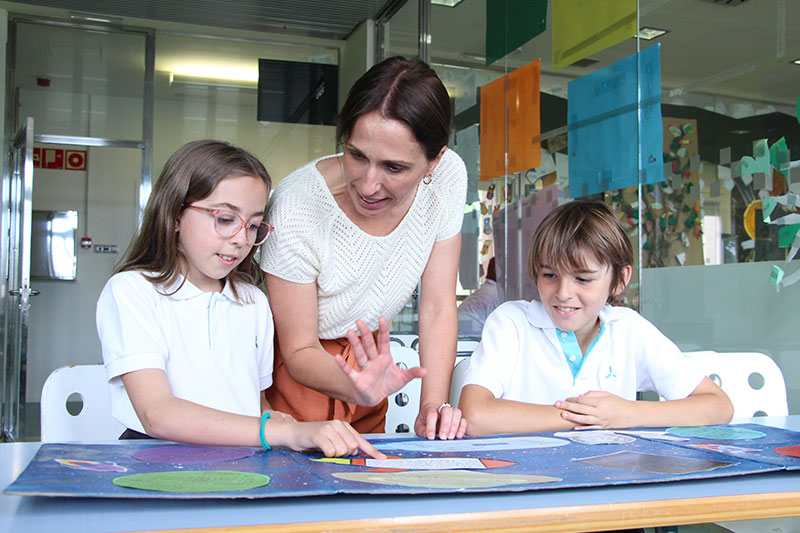
While students develop through their experiences at school, home and within the community, often, in traditional education settings, these perspectives are not connected, limiting how they engage, understand, and feel supported to achieve. The school’s Tripod Learning model challenges the assumption that the school holds the primary authority on how students learn, and instead takes the approach to recognise, understand and respond to each student’s individual learning path in the most authentic and complete way. With the student at its core, the structure is surrounded by three equally weighted perspectives: school, family and the student themself.
Parents are treated as experts and not as observers on the outside, giving learners access to lived experience, knowledge from unique professions, and different experiences and cultures. Teachers act as coaches, bringing their professional pedagogical perspective and working collaboratively to identify strengths, challenges, and learning patterns that bring out each student’s potential and help them become the best version of themselves. Completing the tripod is the student themself who is the protagonist of learning. They are encouraged to reflect on their progress and express their needs and perspectives as they work through real-world projects. Through this, they learn to manage and develop their own academic and personal journeys.
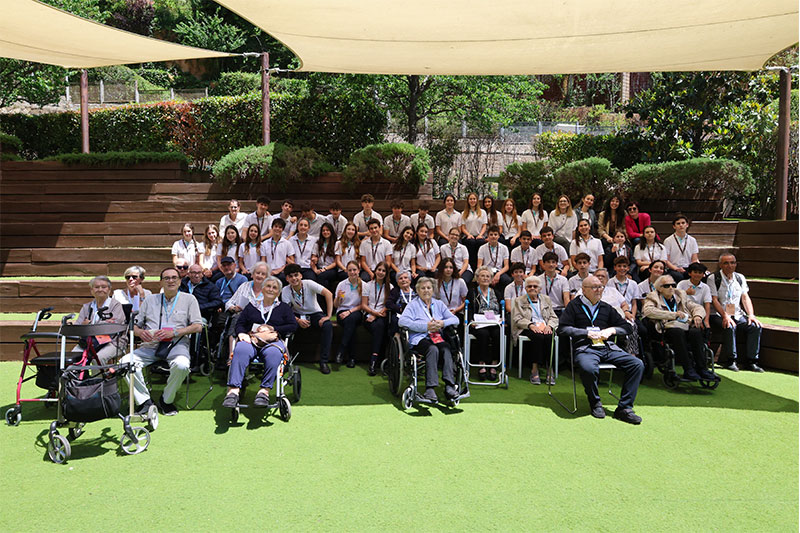
Probably one of the most successful expressions of the school collaborative learning philosophy is its social entrepreneurship programme. Through its ‘Being an Entrepreneur’ initiative, students launch real social minicompanies designed to address societal and community challenges through practical action. These projects are not simulations, but operate with real budgets, real clients, mentors, investors, and measurable social impact, requiring students to collaborate closely with families, NGOs, external partners, and wider community networks. Over the past 15 years, students have launched more than 300 small companies focused on environmental sustainability, social inclusion, humanitarian support, and intergenerational care. Families also actively mentor and invest in these companies through the school’s annual Investor Forum, helping students connect entrepreneurial learning to real-world accountability and decision-making, and playing a crucial role in defining new projects. In one student-led initiative, learners created a virtual reality project for elderly people, allowing one man to revisit the streets of his childhood with VR glasses.
Another prime example of where the model had great impact is when Artificial Intelligence began to emerge as a relevant educational tool, instead of implementing it unilaterally, the school co-created an institutional AI Protocol together with teachers, families and students. Through dialogue sessions and expert consultation, ethical guidelines were established, pedagogical purposes were clarified, and digital literacy awareness was reinforced.
Guided by the belief that experiences must be intentionally designed to train students in authentic simulations so that competencies can be genuinely developed, the model has achieved great success. The school presents 100% of its students for university entrance examinations, maintaining a 100% pass rate over multiple years. Students regularly perform above the national average in key subjects such as mathematics and English, and in the International Baccalaureate, the school achieves an average score of 34, compared to a global average of 30.
At a community level, more than 6,000 families have participated in structured learning programmes since 1994, while over 400 families have actively contributed to recent initiatives such as Parents Beyond Screens. Student agency is perhaps most visible through the 300 social minicompanies launched in recent years. Several projects have received European recognition, while all require students to collaborate with families, mentors, NGOs, investors, and external partners as they develop solutions with measurable social impact.
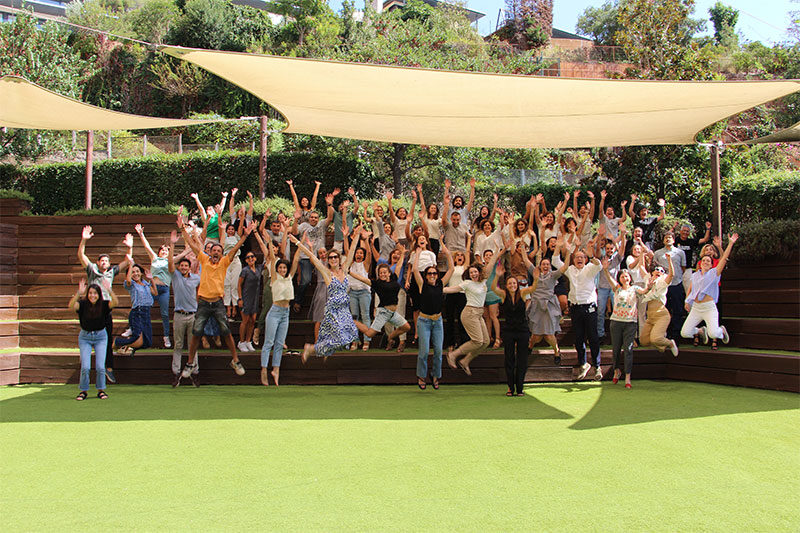
The collaborative model extends to staff culture, where teachers work in teams, share responsibility and grow continuously within a supportive environment. This has created a strong sense of belonging and purpose, with many choosing to remain at the school because of the opportunity to develop alongside their students.


Check out our social media!