Environmental action - 2026 TOP 10 SHORTLIST
EuroSchool Bannerghatta
Bengalaru, Karnataka, India
The Indian school spearheading nature-inspired learning to drive environmental advocacy and restore wellbeing in the home
EuroSchool Bannerghatta, an independent kindergarten, primary and secondary school in Bengaluru, Karnataka, India, is spearheading nature-inspired schooling in a deliberately designed learning ecosystem, where academics, wellbeing, sustainability and life skills are fully integrated to build emotionally resilient and capable environmental advocates. Positioned in one of Bengaluru’s fastest-growing neighbourhoods, where urban expansion is colliding with a fragile ecosystem, children in the community are growing up with climate anxiety, mounting academic pressure, and digital overload. Many have little outdoor access, which means they often don’t engage in physical activity, increasing their digital dependence. Because the majority live in dual-income households, there is often a lack of parental support.
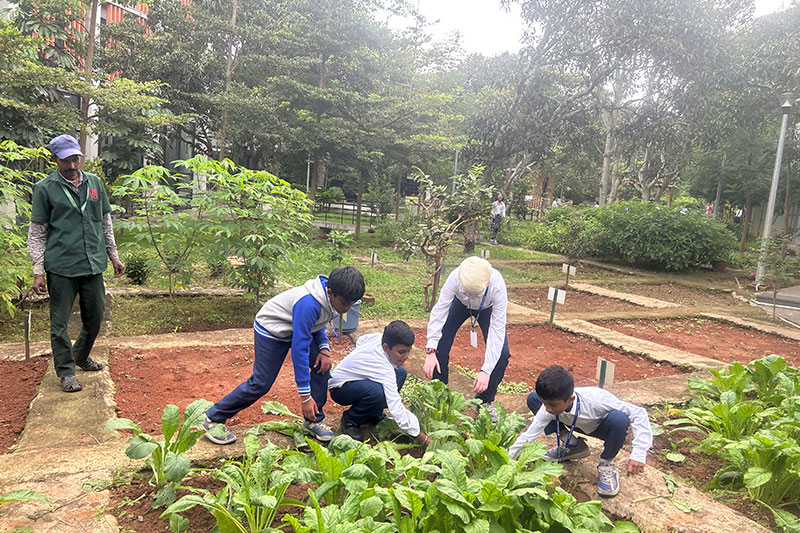
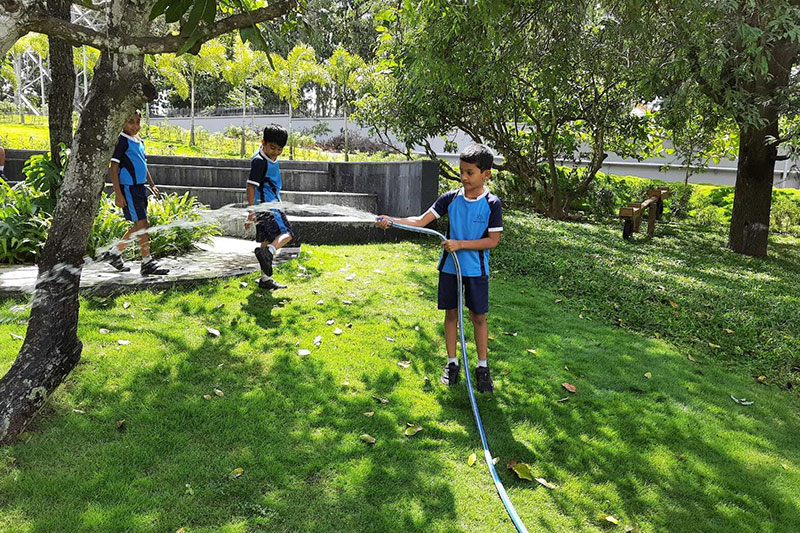
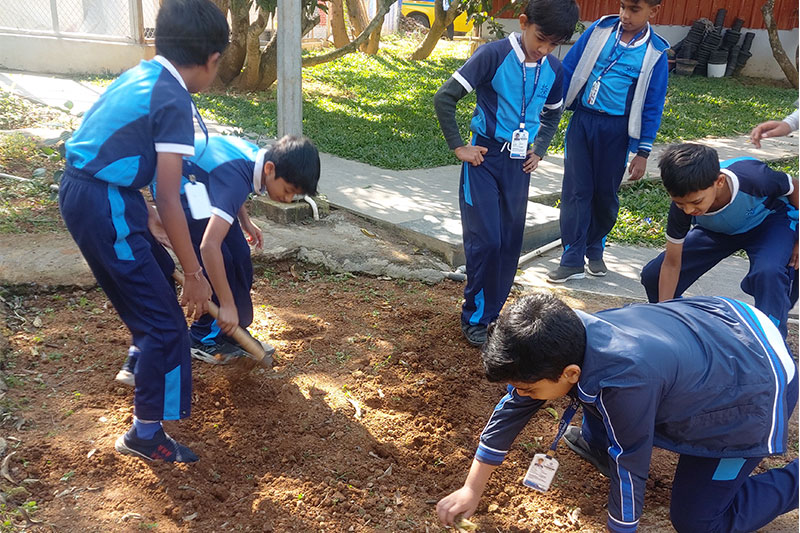
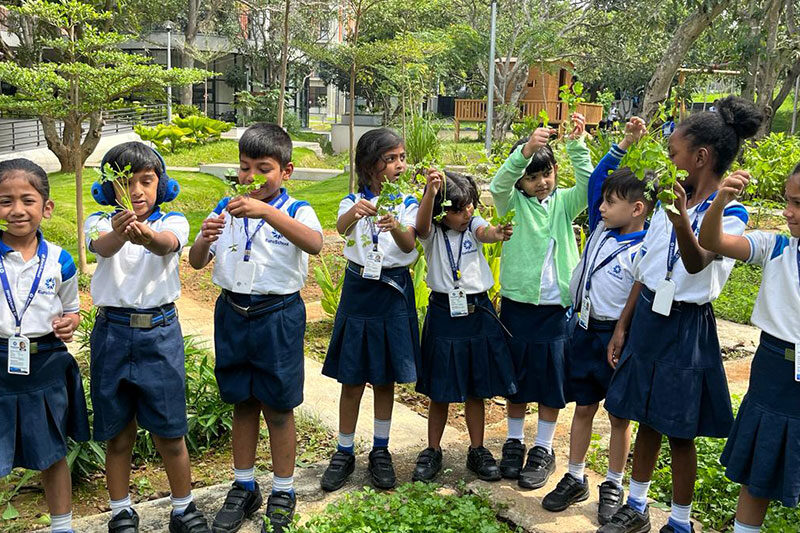
To provide learning that meets the pressures children are actually facing today, the school restructured how its curriculum is experienced at a systems level, positioning nature as a central component. During the development of the campus, approximately 80% of the site’s existing trees were intentionally preserved, with the school designed around the natural ecosystem rather than replacing it. Through its SOUL (School Outdoor Learning) hubs, approximately 25% of teaching in the early and primary years takes place outdoors, where students map biodiversity, observe ecosystems, analyse environmental systems, and explore concepts such as measurement, reflection, and sustainability directly within natural settings. This integration shifts environmental education so that learners can understand how systems work and, crucially, how they are connected to them.
Traditional time constructs have been removed, and the school now operates on a whole school Day Boarding model that brings academics, homework, sports, arts, and life skills together into one continuous, carefully designed day. This reduces the pressure that typically spills into after-school hours so that students can focus on family time in the evenings.
The school recognises that climate awareness cannot be separated from emotional resilience. Through its COWB framework, focused on community, ownership, wellbeing and belonging, students develop emotional resilience.
Behavioural referrals have reduced by 18% over two academic years, while more than 85% of students report a strong sense of belonging within the school community. 100% of students receive structured social-emotional learning. With approximately a quarter of instructional time taking place outdoors, the school has recorded a 20% improvement in foundational motor skills in early years and primary grades, alongside engagement levels exceeding 90% in experiential sessions.
Through the Day Boarding model, more than 95% of homework is completed within school hours, which has had a direct impact on family life, with 88% of parents reporting reduced after-school stress and improved time together.
Sustainability is embedded into the operational systems of the school, and waste segregation ensures that more than 70% of daily waste is diverted from landfills, while composting systems return organic material back into the soil. Architectural design choices including natural light optimisation and cross ventilation have also reduced daytime electricity usage by approximately 30% compared to conventional urban school buildings. Learners actively conduct waste audits, monitor consumption patterns, analyse wastage trends, and participate in discussions around resource scarcity, environmental responsibility, and sustainable living, helping environmental care become a daily behavioural practice rather than an isolated awareness campaign. Student-led projects like the Farm to Table initiative yield 20 kg of seasonal produce annually, and the Clean Plate initiative has led to a 60% reduction in cafeteria food waste. Surplus food from the school is redistributed regularly, supporting more than 100 families each month.
In just four years, the school has grown from 100 to over 1,100 students.



Check out our social media!