Innovation - 2026 TOP 10 SHORTLIST
Khan World School @ ASU Prep
Tempe, Arizona, USA
The American online school proving students can learn anywhere, at their own pace, and still achieve
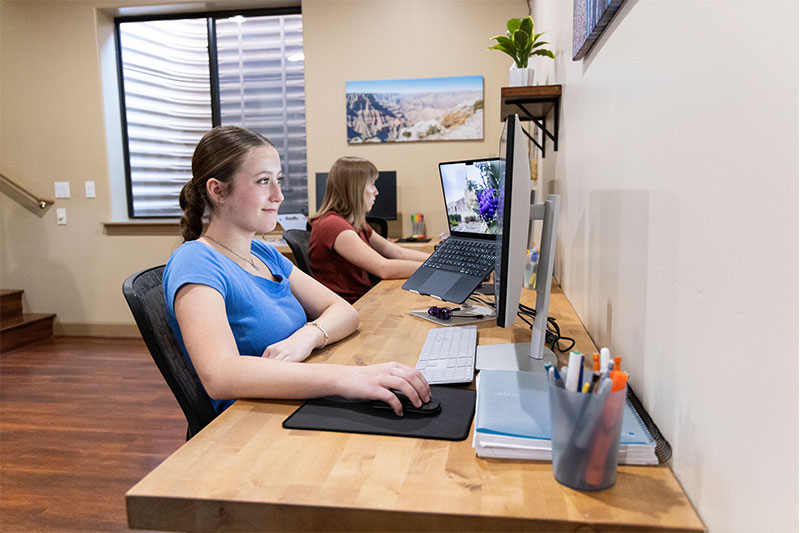
Khan World School @ ASU Prep, a fully remote online school serving 6th-12th grades in Tempe, Arizona, USA, is redefining what rigorous online learning can look like by building a model where flexibility is paired with mastery, accountability and unusually strong human connection. With students across five continents, more than 20 countries, and over 30 US states, the learning model gives students who need flexibility due to health, elite athletics, family responsibilities, travel, or other activities outside of school the opportunity to thrive with self-paced regulation delivered through best-in-class platforms.
The model has been designed around the principle that students should progress when they can prove learning, not simply when enough time has passed. This philosophy is embedded across the entire model through what the school describes as “mastery over minutes” and “proof over guessing”. Instead of working within traditional age or grading systems, learners progress at their own pace, revising and resubmitting work until they reach proficiency. Through an ongoing process of feedback, reflection and improvement, they design their own learning pathways based on their individual strengths and external commitments with no pressure. Students have access to hundreds of online Arizona State University college courses and are able to enroll in college pathways that interest students and meet high school graduation requirements.
The structure is highly personalised, and teachers act as House Guides, combining the roles of subject expert, mentor, and adviser. They meet with students regularly (at least twice a month) to track progress holistically, support wellbeing, guide course selection, and assist with graduation and college planning. This integrated role replaces the need for separate guidance counsellors, a distinctive feature of the model.
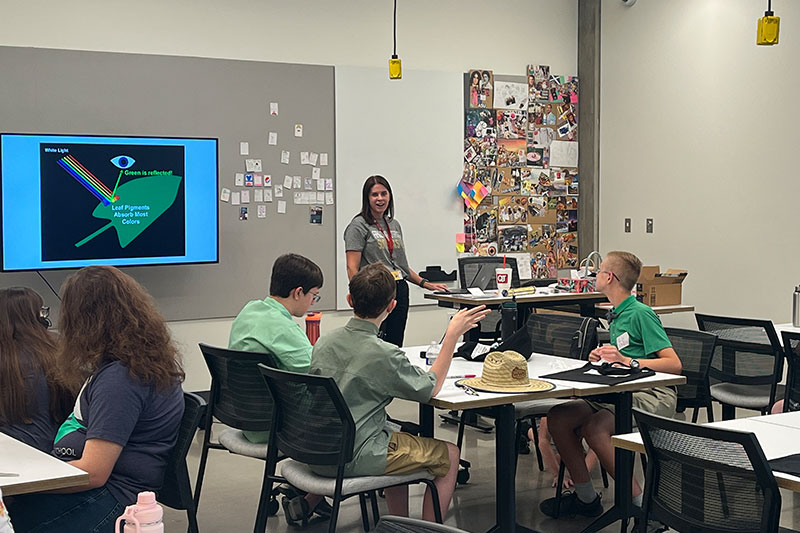
Clear strategies to ensure high levels of engagement and motivation are put in place from the start, and students must attend live, discussion-based sessions, with attendance expectations built into the structure. Learners must also actively participate through speaking, using microphones, and engaging in chat, which is a graded component of each course. They are expected to show their understanding continuously through projects, labs, Socratic discussions and video-based explanations, keeping them connected to the learning at all stages.
Students are given agency to build their own schedules within a flexible framework; live sessions are offered at different times to accommodate global time zones, and they have a chance to connect with other learners from around the world through clubs and social events, which include a prom and graduation ceremony. They are also encouraged to propose projects, partnerships and initiatives, with leaders describing a culture that works intentionally to enable student-led ideas wherever possible.
During the 2022–2023 school year, students achieved 4.6 times the average expected growth in Mathematics, 3.4 times the average growth in Reading and 5.3 times the average growth in Language Arts. Arizona-based students also achieved an average ACT score of 29.1 out of 36, significantly above the state average of approximately 20.
Partnerships are deeply embedded in the school’s model and have played a critical role in shaping both its philosophy and pedagogy. Khan Academy and founder Sal Khan remain closely involved in the school’s learning design, while Arizona State University provides institutional support, access to college-level coursework and integration into a wider educational ecosystem. The University of Chicago and the Center for Radical Innovation for Social Change (RISC) also contributed to the development of the school’s Socratic, discussion-based seminar model focused on real-world issues and critical thinking.
The school’s approach is also increasingly being recognised internationally as an example of how online learning environments can be places where students learn accountability while still feeling connected and supported.


Check out our social media!