Innovation - 2026 TOP 10 SHORTLIST
PCMC Chhatrapati Shahuji Maharaj English Medium School Kasarwadi
Pune, Maharashtra, India
The Indian school that turned a community into a ‘book village’, where children have become published authors of over 100 stories
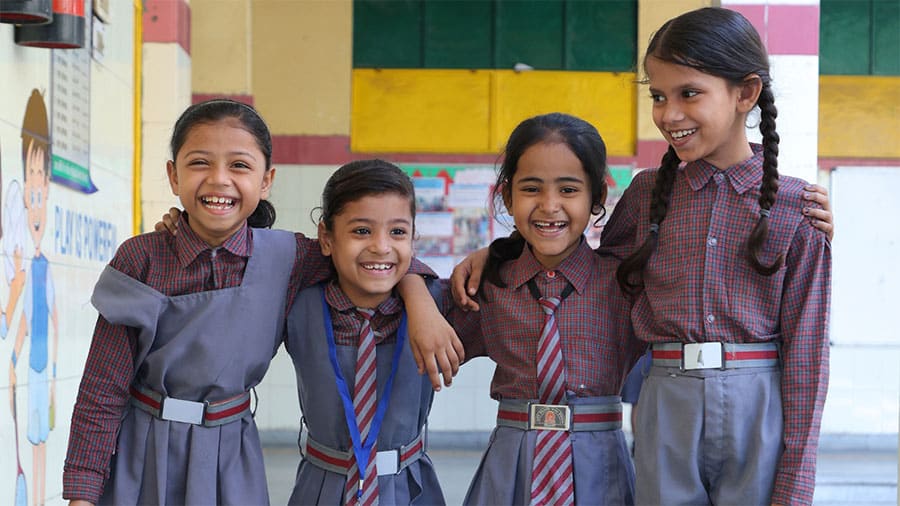
PCMC Chhatrapati Shahuji Maharaj English Medium School, a public kindergarten, primary and secondary school in Kasarwadi, Pune, Maharashtra, India, has ignited a community reading movement where children who traditionally had no access to reading and were below grade level in literacy have agency as readers and critics, and have published over 15 books by over 100 student authors. For many first-generation learners in the underserved region, English is their third language. A large portion is illiterate, with literacy skills ranked below reading level. Shaped by migration from across India and characterised by low socioeconomic challenges such as poverty and families working in informal labour, the school represents their first sustained access to books.
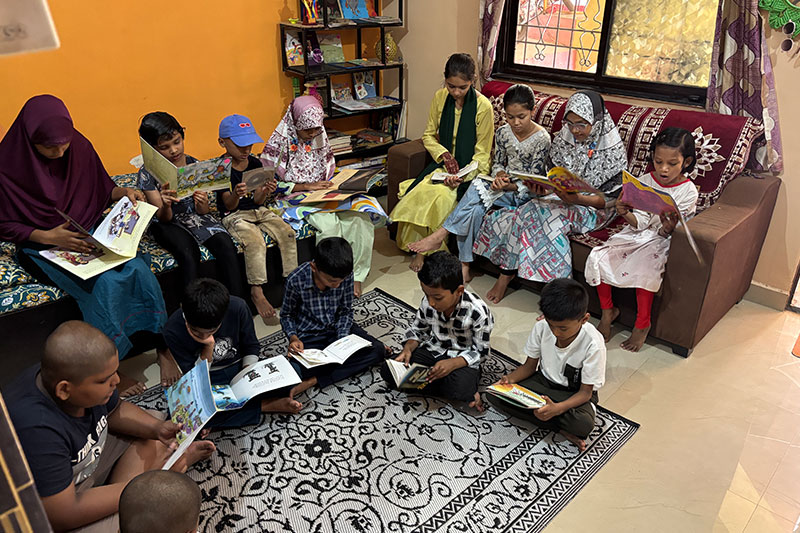
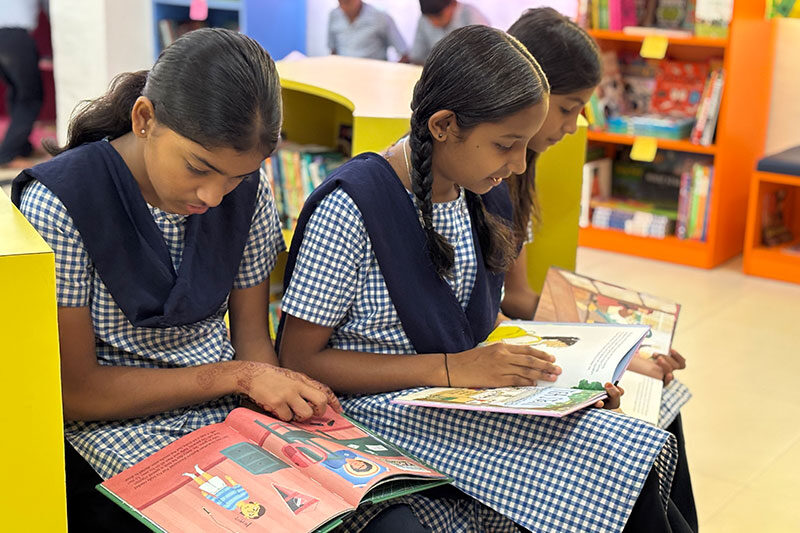
Driven by its motto, ‘Raising a generation of readers and creating a safe space for all’, the school made the defining shift to democratise reading through a philosophy that moves literacy from an academically prescribed task to a participatory culture. Because reading had never become personal or joyful for many children, the books they had access to didn’t resonate with them personally, and they disengaged. The redesigned model puts reading at the centre of everyday school life through structured time, environment, and culture, where students choose their own books and connect and engage in discussions. Through the approach, the region is aspiring to become a ‘book village’ for children, families, and community members.
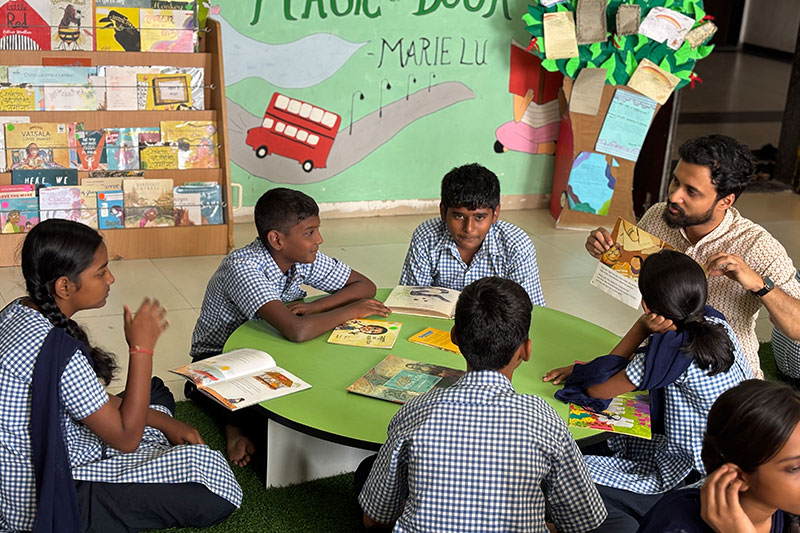
Teachers act as reading role models rather than only as instructors, bringing books directly into classrooms and introducing stories through conversations rather than assignments, while students become active participants in selecting titles that reflect their interests, languages and realities. Monthly teacher reading circles encourage the faculty to engage deeply with children’s literature and reconnect with the emotional experience of choosing and loving books, a culture which extends into the classroom.
A Drop Everything and Read (DEAR) period now takes place every morning across all grades, four days a week, with teachers reading silently alongside students. Dedicated library periods, reading journals, readathons, storytelling sessions and author visits transformed reading into a visible, shared public activity across the school. The library remains open after hours, with more than 50 students staying back daily by choice. The movement even inspired local leaders to change a statue in the community's principal park from a figure carrying a sword to a figure carrying a book.
The most distinctive element of the model is how it has given students the skills to write books other children can read. Seeing their own words on library shelves alongside those of published authors has reshaped how they perceive their voice and value.
A renewed interest in reading has also extended to families, with some parents who had never previously owned books building home libraries and participating in reading circles. One family installed an open-access community bookshelf in their garage, while another parent returned to complete his own schooling after reconnecting with learning through his child’s reading journey.
By introducing the joy of books as core to its curriculum, 100% of primary students reached grade-level reading benchmarks within three years. The reading gap in upper grades was reduced by 60% to 80%, and approximately 75% of students now regularly borrow library books, averaging one book every two weeks. The school’s first Grade 10 cohort achieved a 100% board examination pass rate.
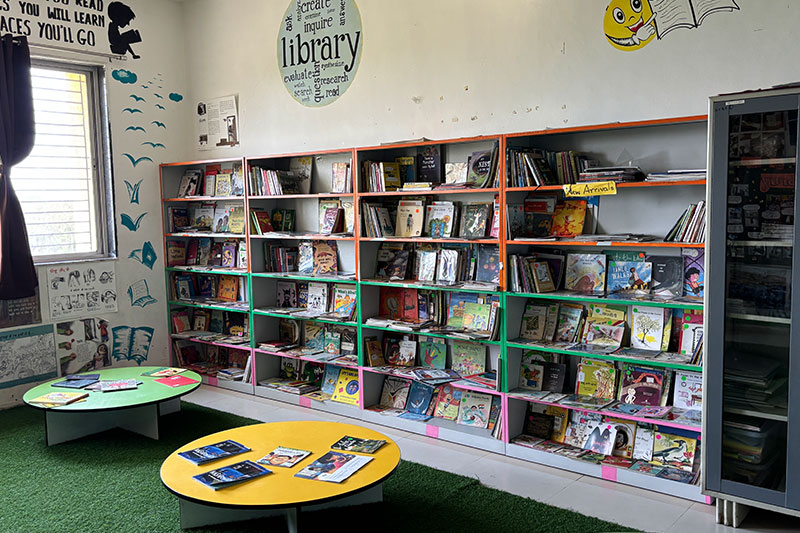
Over four years, the school’s library expanded from 1,000 to more than 4,000 books across English, Hindi and Marathi, deliberately curated with the students rather than for them, and the school’s annual Kathakaar Literature Festival attracts thousands of participants, including families, authors, policymakers and community leaders.
Following recognition from municipal leadership, the model was adopted across more than 50 public schools, leading to the distribution of 138,000 books and the installation of 677 library cupboards, reaching over 20,000 students, 500 teachers and 50 school leaders.

Check out our social media!