COMMUNITY COLLABORATION - 2026 TOP 10 SHORTLIST
Inventure Academy
Karnataka, Bengaluru, India
The Indian school pioneering a community-focused learning model that has increased enrolment by 450%
Inventure Academy, an independent kindergarten, primary and secondary school in Karnataka, Bengaluru, India, has pioneered a collaborative learning ecosystem that includes families and the wider community as a core part of its pedagogy to support students and empower every learner to fulfil their potential, ignite change, and create a positive impact in the world around them. In India, access to quality education is still heavily shaped by socioeconomic background. Initiatives to confront this challenge are typically short-term, charity-driven, and disconnected from long-term systemic change.
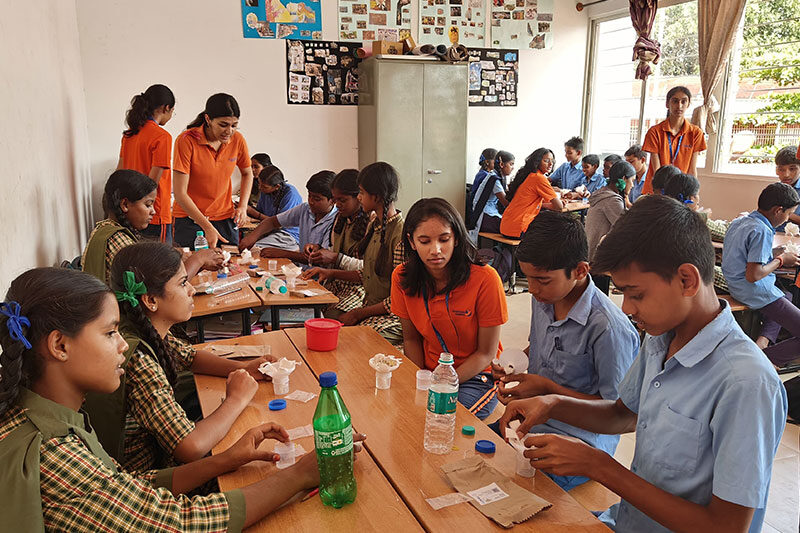
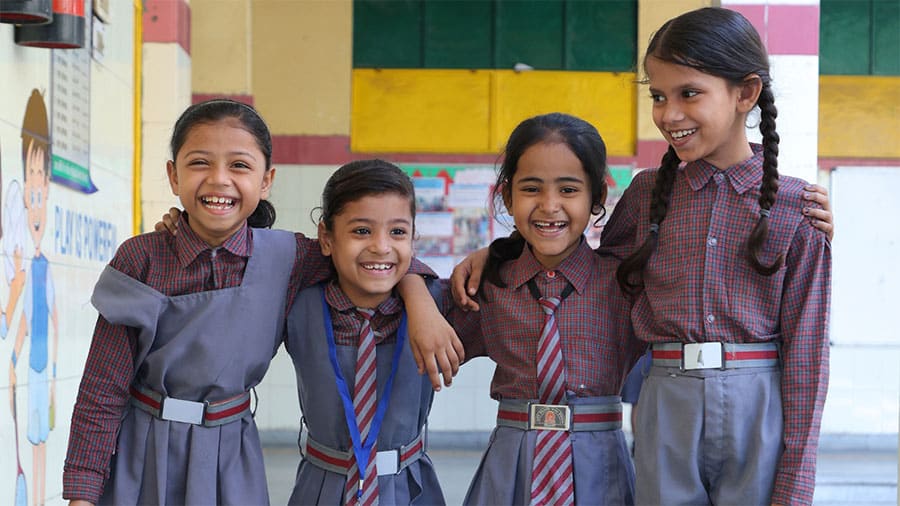
When Inventure Academy began engaging with underserved communities in Bengaluru, the school recognised that these types of short-term volunteer outreach programmes weren’t making meaningful strides in sustainable transformation. Many children in the communities they worked with had never attended school, while their families lacked access to affordable English-medium education, leaving confidence in the public school system low. In response, the school moved away from short-term outreach and instead developed a long-term public-private collaboration model together with the Karnataka government, community organisations, and local stakeholders focused on strengthening government schools from within and creating sustainable systemic change.
Determined to build a collaboration model around the idea that real educational change must be created with communities rather than for them, the school embedded collaboration into the centre of its learning philosophy. One of the strongest examples of this is its long-term partnership with government schools in Karnataka. In 2019, through a formal Memorandum of Understanding with the Karnataka government, the school partnered with Government Higher Primary School at Ramagondanahalli to help strengthen infrastructure, pedagogy, teacher development, parental engagement, and access to quality English-medium education for migrant and low-income communities.
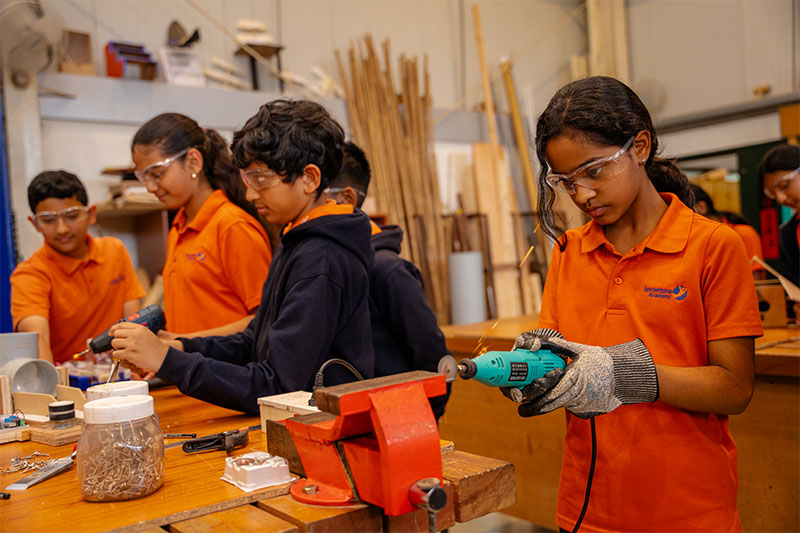
Inside classrooms, learning is intentionally designed to connect students with the world beyond school walls, and they work on interdisciplinary projects, engage with researchers and community organisations, participate in internships and mentoring programmes, and develop solutions to real societal challenges. Examples of this are the Change Maker Challenge, where students developed a project focused on encouraging attendance, which successfully helped around 60 children return to formal education, and Inventurepreneurship, which connects students with entrepreneurs, social organisations and community leaders, enabling them to take part in real-world challenges as teams who are positively impacting community development.
Teachers guide and support through collaborative planning and inquiry-driven learning models that encourage learners to self-reflect and experiment in real-world application. Parents are also treated as active partners within the learning ecosystem, contributing through town halls, focus groups, wellbeing initiatives, and ongoing collaboration around student growth and school development.
Over five years, enrolment has increased by more than 450%, growing from fewer than 200 students to more than 1,050, with hundreds of additional students now on the waiting list. Attendance rates are close to 90% despite serving highly mobile migrant communities, and the school’s first Grade 10 cohorts achieved a 100% pass rate in public examinations compared to a state average of 62%. Independent ASER assessments also showed significant increases in parental participation.
With the belief that it takes a village to raise and empower children at the core of the model, partnerships with organisations like the National Centre for Biological Sciences, the Prayoga Institute of Education Research, and the CERN Educational Programme allow learners to participate in mentored research, scientific inquiry, internships, and interdisciplinary projects connected to real community issues.
Following the success of the Ramagondanahalli partnership, the model was extended in 2024 through a further collaboration between Inventure Academy, the Prestige Group, and the Department of School Education to support three additional government schools.
Since the launch of the Change Maker Challenge, more than 150 schools and communities have become involved to generate over 750 student-led ideas and support approximately 350 formal student pitches across India and internationally. Projects have focused on issues ranging from mental health and environmental sustainability to peer tutoring and re-engaging out-of-school children.
The Inventure community has also contributed to wider civic and policy conversations through initiatives such as Our Safety, Our Voice, whose recommendations informed Karnataka’s Child Safety and Protection Act; Our Lakes, Our Voice on lake rejuvenation and environmental awareness; Our Future, Our Voice, which contributed perspectives toward India’s National Education Policy; and Our Mobility, Our Voice, focused on Bengaluru’s mobility and infrastructure challenges. These initiatives have enabled students to engage directly with government bodies, civic stakeholders and local communities as contributors to wider public discourse and systems-level change.


Check out our social media!