Environmental action - 2026 TOP 10 SHORTLIST
Slum2School Green Academy
Epe, Lagos, Nigeria
The climate-smart Nigerian school making daily attendance for riverine children a possibility through its Green Academy
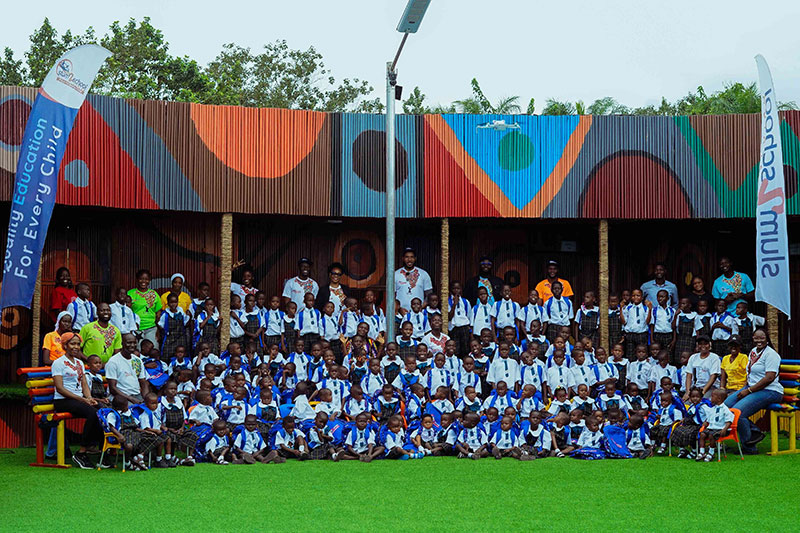
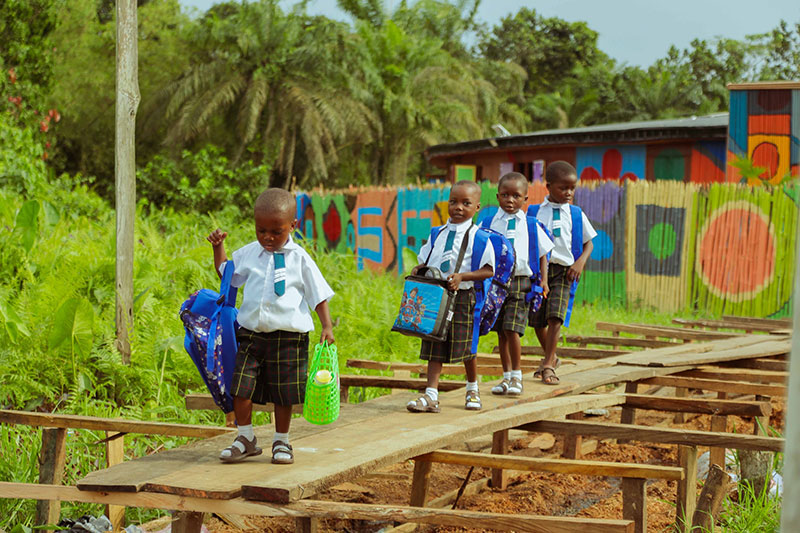
Slum2School Green Academy, a charity-run kindergarten and primary school in Epe, Lagos State, Nigeria, is advancing learning for 250 underserved children from eight riverine communities through a first-of-its-kind, climate-smart school with an experiential, inquiry-based learning model that helps students gain up to three years of learning in one school year. Located in Saga in Western Nigeria, one of the most remote water-locked settlements about an hour from land, the school exists in a place where formal education was, for generations, effectively out of reach. Children would need to travel long distances by canoe to attend school, a journey that made daily learning impossible. Most never learned to read or write, while families faced deep, intergenerational poverty compounded by the absence of clean water, electricity, healthcare, and basic infrastructure.
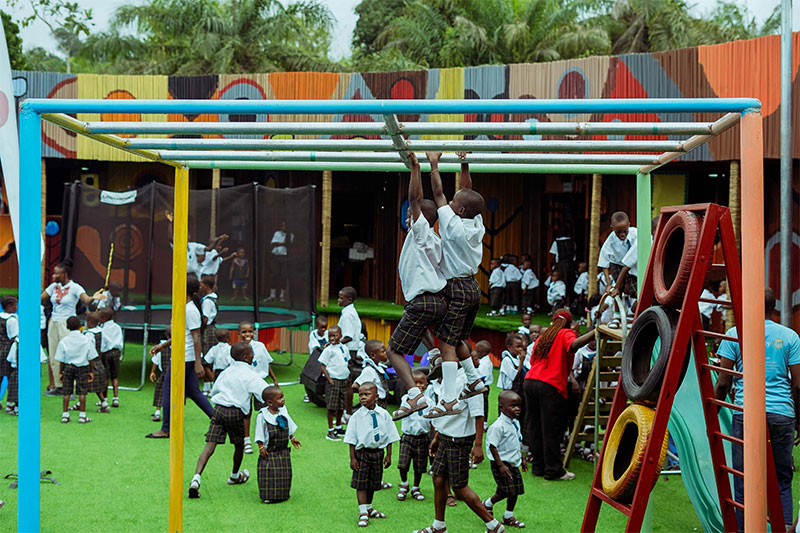
Realising that a conventional school model would not be viable because of the environmental and logistical constraints, the school built a Green Academy using locally sourced natural materials such as bamboo and wood, allowing it to integrate with the environment and withstand local conditions. Designed as a climate-smart, eco-friendly system that is largely self-sustaining, it is a living ecosystem where students learn in classrooms cooled by natural ventilation, drink clean water harvested on-site, participate in waste management and recycling, and grow food in school gardens.
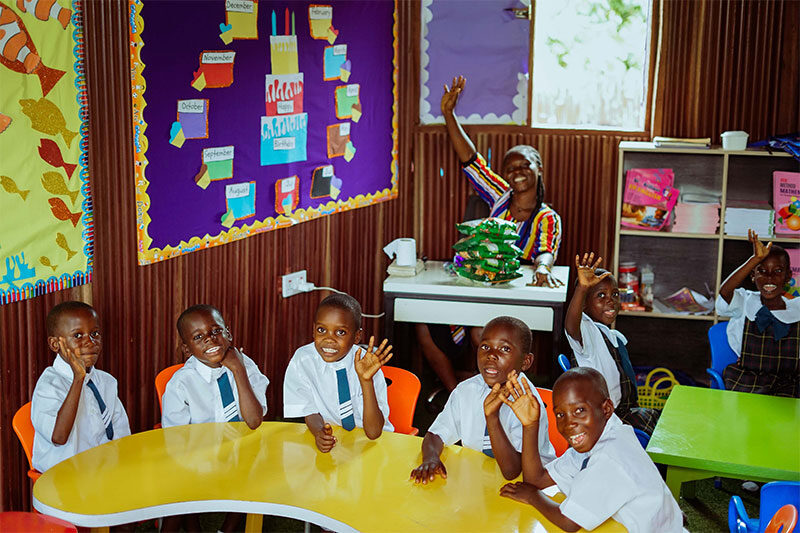
The school’s pedagogy is built around the reality that most students are starting from little or no prior exposure to formal learning, with teaching structured around a blend of project-based, play-based and hands-on learning that allows students to build literacy and numeracy through experience instead of books. Lessons are intentionally designed to connect what the learners live in their day-to-day lives, using visual, physical and experiential approaches. The curriculum deliberately introduces global perspectives through digital tools, storytelling and guided exploration, giving children the chance to see themselves in a wider world, which builds their confidence and curiosity.
Students actively engage in the school’s environmental systems, which helps them practically understand concepts like water conservation, renewable energy and waste management, and classroom-led peer projects like building a school garden that includes composting and harvesting, and converting water hyacinth into usable and marketable products, are teaching them skills which they can use beyond the classroom. Older students are also given the opportunity to mentor younger learners, helping them understand sustainable practices while building their leadership skills.
Additional resources within the school include a digital lab for computer learning and coding, as well as a library to support reading development.
The model is strongly community-driven, with parents and community members playing an active role in the school’s design and construction. They are encouraged to participate through regular PTA meetings and open days, and to get involved in school-led initiatives that have increased interest in education among adults in the area.
Through the reimagined model, 96% of students have improved at least one proficiency level in literacy and more than 70% in numeracy. Over 90% are now reading at or approaching grade level despite the majority starting without foundational skills. Attendance reached 80% within the first academic year.
In terms of environmental impact, the campus operates entirely on solar energy, generating approximately 28,000 kWh annually and eliminating an estimated 10–15 tonnes of carbon emissions. Rainwater harvesting systems provide up to 160,000 litres of clean water each year, waste-to-biogas systems are producing around 1,400 cubic metres of clean cooking gas annually, and student-led stewardship has reduced unmanaged waste on campus by 80%. More than 700 families now benefit from improved water access, sanitation practices and environmental awareness.
What makes the Slum2School Green Academy truly unique is its replicability as a scalable blueprint for Africa’s first network of sustainable, community-centred schools, where educational equity, climate action, and innovation can coexist even in the most challenging contexts.



Check out our social media!