Innovation - 2026 TOP 10 SHORTLIST
Centro de Educação Infantil Rosa Mutran Maluf
Cuiabá, Mato Grosso, Brazil
The Brazilian kindergarten confronting racism by reinventing early childhood education through living learning territories
Centro de Educação Infantil Rosa Mutran Maluf, a non-profit kindergarten in Cuiabá, Mato Grosso, Brazil, part of the popular education movement Fé e Alegria, is challenging racism and reinventing early childhood education through a pioneering learning model that transforms traditional classrooms into living, sensory, and investigative territories where children move, explore, create, and learn through multiple experiences every day. Located in the Jardim União neighbourhood, a community shaped by poverty, social vulnerability, and racial inequality, many of the school’s young learners come from black communities historically excluded from high-quality early childhood education.
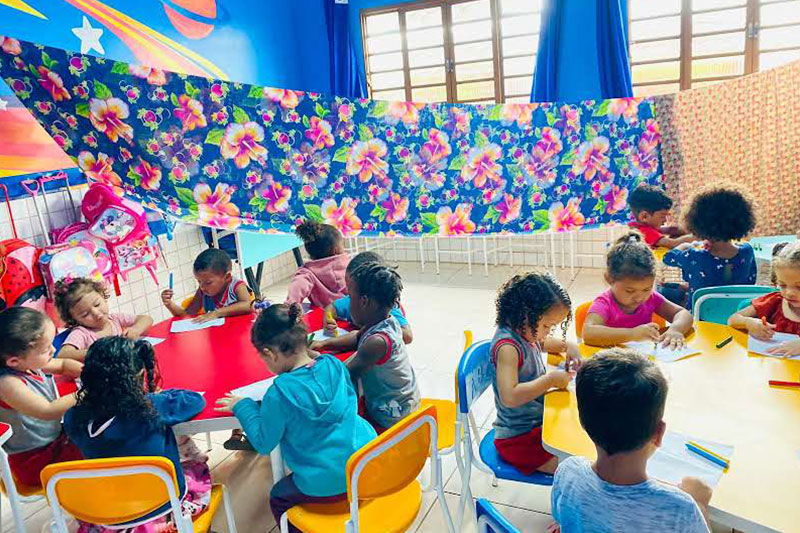
After realising that traditional educational structures could no longer meet the emotional, developmental, and social needs of marginalised children, the school chose to completely reconstruct how early childhood education was experienced physically, culturally, and pedagogically. That transformation became the foundation of Criancice, the methodology developed by the school that has replaced fixed classrooms with themed learning territories. Rather than remaining in a single classroom throughout the day, children rotate through multiple environments during the week, engaging with different teachers, experiences, and perspectives as part of a full-time, integrated educational journey.
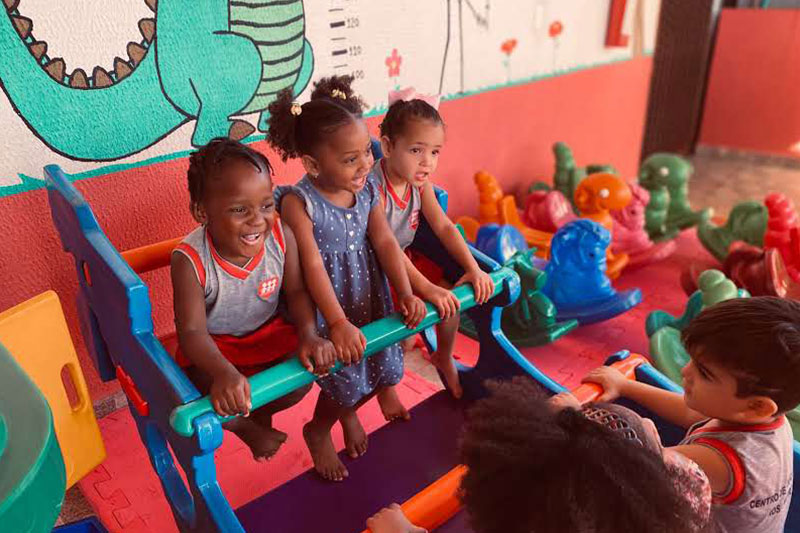
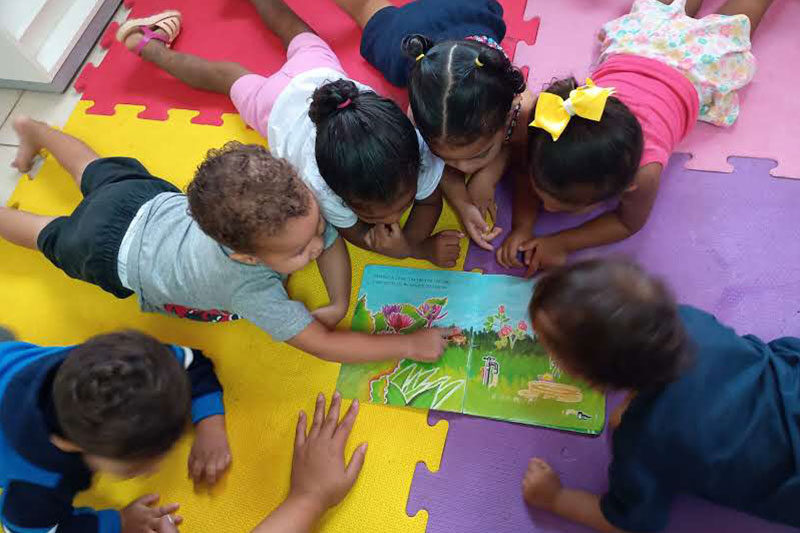
The school has five themed spaces, each supporting a different part of childhood development. In one room, children learn about the world through science and exploration. In another, they dive into arts, culture, and creativity. Other rooms help them build skills in storytelling, literature, music, and communication, focus on movement and emotional awareness, or explore technology, logic, games, and ethnomathematics.
Known as “pedagogical workshops” because the environment itself helps teach, children move freely between activities, exploring, making choices, asking questions, and learning through play, interaction, movement, and discovery. Ideas like colours, communication, teamwork, and emotional expression are explored in different ways, helping children connect their thinking, feelings, social skills, and cultural understanding.
Ethnic and racial inclusion is a key part of the school’s philosophy. The classrooms include black dolls, books about ancestry, Afro-Brazilian and Indigenous cultural references, media featuring black protagonists, and activities that celebrate local Cuiabana culture. Anti-racist education is part of daily life at the school, aiming to build identity, self-esteem, dignity, and a sense of belonging.
Rather than having one teacher for each group, all teachers work together across the different spaces, using their own strengths, talents, and interests. They also receive training in anti-racist education and emotional development through workshops.
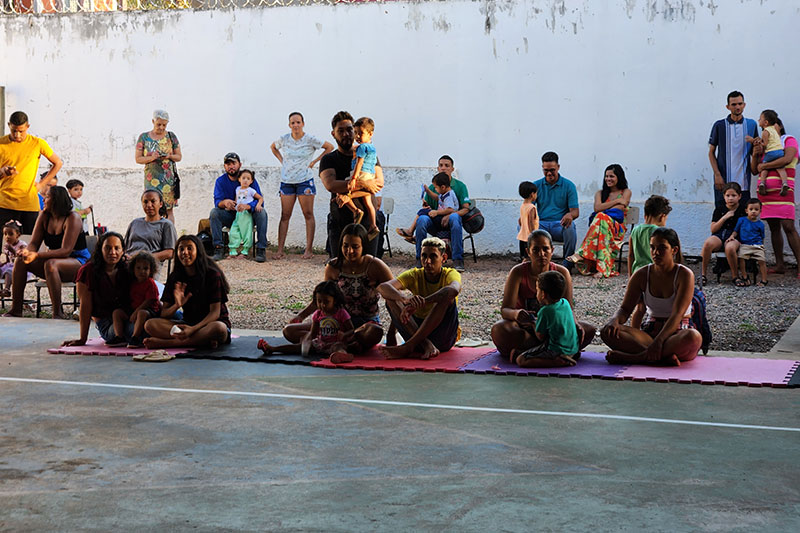
Families and the wider community are deeply integrated into the educational process and often take part in decision-making, evaluate projects, contribute ideas, and engage in cultural gatherings, conversation circles, and educational activities hosted by the school.
Through the Criancice methodology, children are showing stronger autonomy, emotional expression, communication skills, collaboration, and social interaction. Behavioural problems have reduced significantly. Families have also become far more involved in the educational routine, while teachers describe feeling more confident, prepared, collaborative, and professionally fulfilled.
The school is now seen as a model for early childhood education locally, nationally, and internationally. It was chosen for the International Early Childhood Project, which is part of Brazil’s First 1,000 Days program, and earned an average score of 4.7 on the well-known ITERS-3 scale for educational quality.
The centre works closely with universities, municipal educators, and the wider Fé e Alegria network, which connects 34 educational and social centres across Brazil, and in 2024, another Fé e Alegria centre in Cuiabá fully adopted the methodology, demonstrating its replicability and wider educational influence.


Check out our social media!