Innovation - 2026 TOP 10 SHORTLIST
G-School
Seoul, South Korea
The Korean school that acts as a proof of concept incubator for students who have launched more than 80 real-world impact-led applications
G-School, an independent secondary school in Seoul, South Korea, has positioned itself as a proof of concept incubator where every student leads a long-term social problem-solving project from the moment they enrol, layered into the learning curriculum, to ensure they graduate with a real product, campaign or startup already making an impact. South Korea is home to one of the most examination-driven education systems globally. Students can spend entire school years that include evenings, weekends, and summers, preparing for a single university entrance exam, putting them under extreme pressure and stress. Because national curricula are primarily standardised, deviation is rare, leaving many with little or no avenues for self-exploration, collaboration, or experimentation in learning.
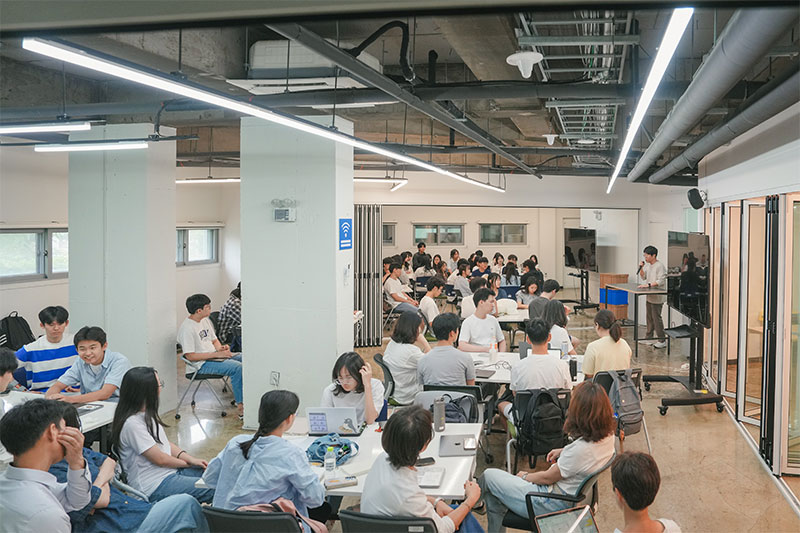
Created as an alternative education institution, G-School was founded on the conviction that the most important thing a school can do is prepare students for a world that needs people who can think critically, collaborate, and take action. The curriculum is structured into four integrated components grounded in project-based learning. In the first year, students participate in Core Lab, students engage with one UN Sustainable Development Goal as the semester theme, integrating Korean, English, mathematics, science, social studies and history to investigate real-world problems and translate their inquiry into action. AI is used actively as a learning and creative partner; in the 'AI and Humanity' unit, approximately 40 students collaboratively authored G-School's own AI Ethics Code. This Core Lab model received the Minister of Education Award from the Korean Ministry of Education in 2025. From there, they move into Alpha Lab where they build the practical and technical capabilities needed to carry their projects through to real-world implementation — design, making, marketing, writing, and digital tools. These specialised studios — which now include AI-driven labs such as AI Marketing Lab, AI Film Lab, and AI Product Lab where AI serves as a creative partner — are run in close partnership with industry professionals and community experts, so that students learn what it actually takes to solve real problems all the way through.
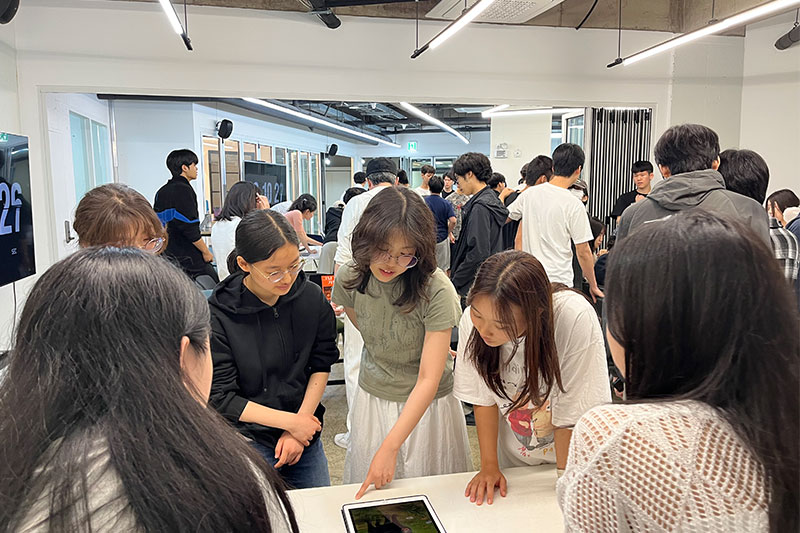
Alongside this, all students across all year levels participate in Project sessions every afternoon, where they work together to identify real-world societal problems and design specific solutions for them. This component is central to the model, as it enables students to continuously apply both their academic knowledge and technical skills in real-world contexts. Finally, students enter Impact Lab where they bring together all of their learning to develop their projects in practical ways, which have included outcomes like launching applications, running campaigns, creating physical products, or proposing policy solutions to government bodies.
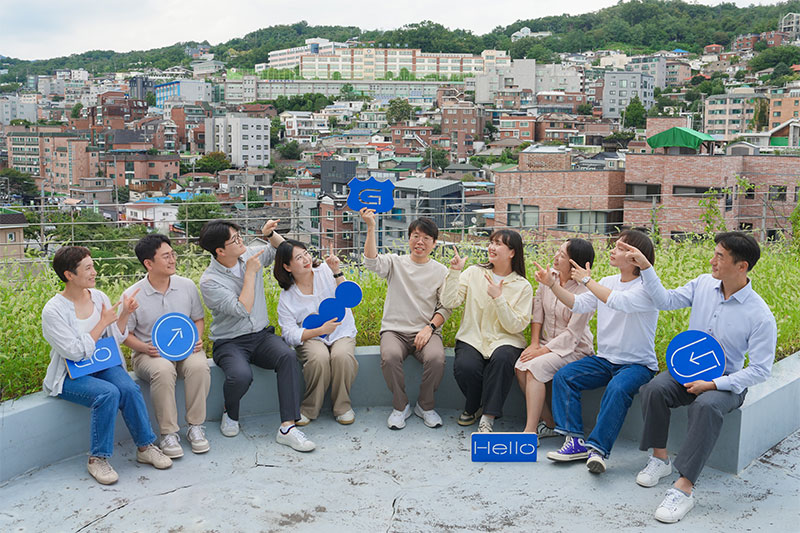
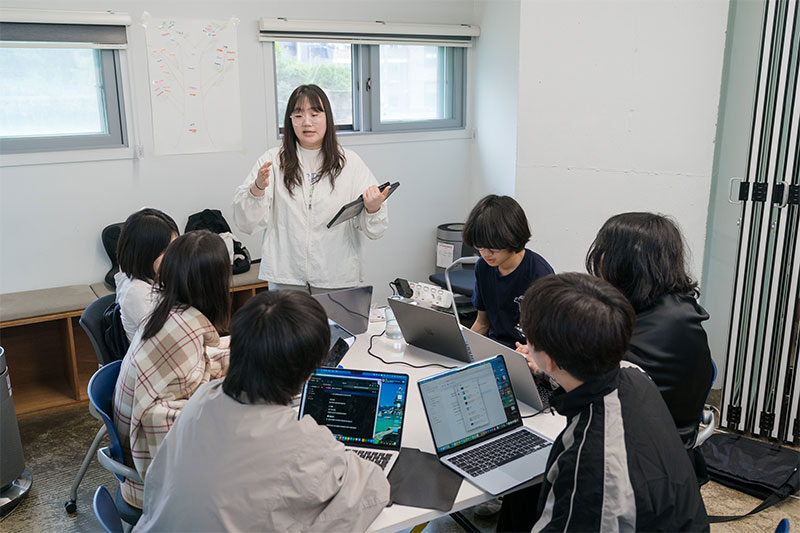
Teachers work as coaches alongside learners, which immediately removes traditional hierarchy constraints. Both staff and students use nicknames to reinforce teamwork and collaboration, and coaches work across disciplines to guide projects, connect students with external experts and support the messy, unpredictable process of solving complex human problems to develop students’ independence, agency and capacity for curiosity and problem-solving.
The result is a school where students do not study the world from a distance. They enter it, change it, and, in many cases, keep changing it after graduation. One student team, for example, identified accessibility barriers faced by wheelchair users in their neighbourhood. After conducting field research and working alongside the Seongbuk Disability Welfare Center, they persuaded 27 local businesses to install wheelchair ramps. Their campaign generated more than 2.3 million online views and later evolved into an ongoing city-wide accessibility initiative. Another team developed Missing Link, a reasoning-based board game that reached 5.5 million online views, sold 900 copies and generated ₩24 million in revenue before evolving into a startup selected for Korea’s national Pre-Startup Package programme.
Since 2020, students have launched more than 80 real-world solutions reaching over 12,000 users, generating ₩39.31 million in revenue and receiving 96 national and regional awards. More than 24% of students enrolled through 2025 have already launched products or won national recognition while still at school.
More than 1,056 educators from Korea, Japan, Taiwan and Hong Kong have visited G-School to study the model, while a public school in Incheon has adopted the curriculum in full. The approach has also received recognition from the Korean Ministry of Education, the OECD Education Directorate and Apple Distinguished Schools.


Check out our social media!